Three Reasons Blogging Proves Profitable in 2026 for B2B Businesses


With the way AI has been changing the marketing world, there’s one marketing channel that remains tried and true: blogging. While clickbait headlines may suggest “Blogging is Dead”—guess what? Click those very headlines and they’ll take you to a blog.
Everything I’ve learned about AI has only strengthened my belief in blogging. (It’s also the main reason behind writing this blog for you.) As a service provider with plans to improve their marketing strategy this year, here are three proven reasons why B2B blogging is still profitable in 2026—plus the SEO and consistency basics that make it work.
CONTENTS
1. BLOGGING ATTRACTS PREQUALIFIED LEADS
I’ve been keeping an active blog since 2019. It continues to drive traffic to my website and introduce me to new clients. But this isn’t by accident. I’ve strategically written blog posts that answer the exact questions my ideal clients are typing into Google. This is why blogging remains profitable for service providers.
With the right approach, you get in front of people who are actively searching for a solution you provide. Unlike social media marketing, where it increasingly feels like you’re marketing into the void.
Having in-depth and clear ideal client profiles are essential here. These provide you with a nuanced understanding around the specific problems they have and how they’re researching or finding solutions to those problems.
Now, if you’re wondering if SEO is necessary when it comes to blogging, the answer is definitely yes. But you don’t need to be an SEO wizard to reap the rewards. You just need to follow a few SEO best practices to improve the likelihood of your blog posts being seen by potential clients.
Each blog post becomes an opportunity to speak to their problem, offer expert guidance, while also presenting your service as a solution to their problem.
As an example, one of my past clients was looking for ways to clarify their brand messaging. They found a blog post of mine on this very topic, booked a call with me, then realized it was far easier to hire me for brand strategy than to try and tackle this themselves.
This is just one of many blogging examples that led me to book a high-ticket client.
BONUS BENEFIT: Unlike social media posts that get visibility for maybe 24 hours if you’re lucky, blog posts will continue to drive traffic to your website for years after you publish it. That’s a far better ROI.

2. BLOGGING BUILDS AUTHORITY AND HELPS YOU SHOW UP IN AI SEARCH
One important reason to be blogging in 2026 is actually because of AI. Increasingly, people are relying on the answers provided by AI-search results, which uses GEO instead of SEO, or are turning to platforms like ChatGPT to get specific answers to their questions.
In simple terms, GEO (generative engine optimization) is the practice of making your business easier for AI tools to understand, trust, and recommend. Businesses that consistently demonstrate credibility and expertise online are far more likely to be recommended by AI tools. In that way, blogging becomes a strategy to build topical authority online, making it easy for AI platforms to associate your brand with those areas of expertise.
Now is a very good time to take your brand strategy seriously. Because AI doesn’t just look for keywords, it looks for brand clarity, consistency, and trust signals. Think of each blog post you publish as a relevant signal to AI that you’re an expert worth recommending.
I wrote a blog post on the difference between SEO vs GEO and what that means for service providers if you want to go a bit deeper on this.
BONUS BENEFIT: A commitment to blogging consistently keeps you sharp and engaged within your industry. Both you and your audience stand to benefit.

3. BLOGGING FUELS YOUR ENTIRE CONTENT STRATEGY
The ripple effect of blogging is not to be underestimated. One blog post can fuel weeks of content across your other marketing channels. We call this content repurposing and it is a service provider’s saving grace. Here’s an example of content repurposing at play:
write a blog post
turn key points from blog into an Instagram carousel post
republish the carousel as a LinkedIn document
send an abbreviated version of the blog to your email subscribers
talk about the blog’s highlights on Instagram stories
turn the core idea into an Instagram reel
share the reel to Pinterest
design 3–6 Pinterest pins that link back to your blog post

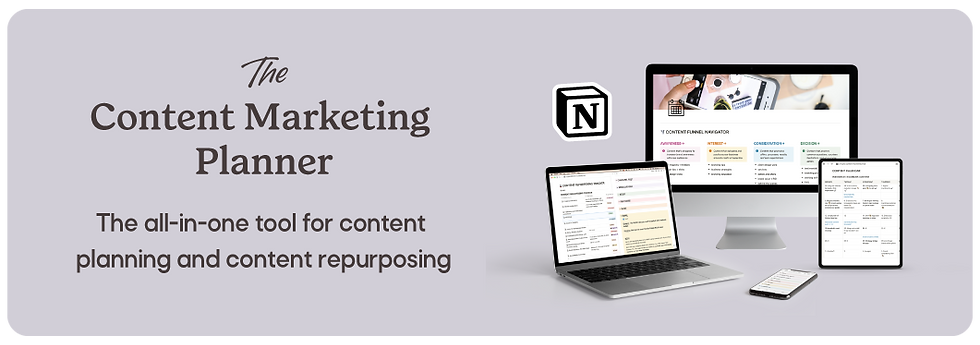
That’s how blogging fuels your content marketing strategy. If you want a system for this, the repurposing tracker inside my Content Marketing Planner makes it ridiculously easy. Having a system in place like this makes blogging sustainable and highly profitable.
The obvious benefit is that content repurposing will save you time when it comes to marketing. But the cherry on top is that it will build your authority on these core topics across your marketing channels, reinforcing your expertise which AI relies on.
Are you starting to understand the benefits of B2B blogging? Good! Let’s make sure you’re optimizing your blog posts to the best of their ability. Here are some SEO best practices worth adopting.
SEO BEST PRACTICES TO USE WHEN BLOGGING
Start with keyword research using a platform like Ubersuggest which will give you three free keyword searches per day. There are three objectives for your keyword research:
To learn which keywords have high search volume—that way you know it’s a popular search topic.
To learn how easy or difficult different keywords are to rank for—focus on the easy to medium keywords.
To gather supporting associated keywords to use throughout your blog post.
Each blog post needs one focus keyword (ideally a long-tail keyword for specificity) and a list of supporting keywords to help rank on Google. It’s important that you’re formatting each blog post using headings, paragraph text, and images. Google scans these blog elements for your keywords to identify if it aligns with a user's search criteria. Here are the places you want to use your keywords when blogging:
Headings (H1, H2, H3)
Image file names
Image alt text
Website slug
Meta descriptions
Hyperlink keywords → instead of writing “Click here to learn about my life coaching services” hyperlink the keyword by writing “See which of my life coaching services feels right for you”.
Use your focus keyword naturally in the intro, in at least one heading, and a few times throughout the post. And definitely avoid keyword stuffing. Remember, you’re not trying to game Google. You’re trying to make it easy for the right people to find your business.
BONUS TIP: Include internal links by linking the blog content to 2–4 related blog posts and 1–2 relevant service pages.
ESTABLISHING A BLOGGING CADENCE
Maybe you’re wondering how often you should be posting new blog content. This is entirely up to you and what feels sustainable. Start by writing one blog post per month. Then set up your content repurposing system using a tool like the Content Marketing Planner. This will allow you to get a feel for how every blog post will influence your content calendar to follow.
In terms of a reasonable blogging cadence, if you do nothing else publish one helpful, keyword-targeted blog post per month for the next 6 months. This consistency is what turns blogging from ‘a nice idea’ into a lead engine.
To this day some of my best clients have found me through a blog post. This can be your reality too! The benefits of blogging are hard to deny. There’s a reason why it has persisted since the beginning of the internet. People will keep searching. AI will keep summarizing. The question is: will your expertise be the thing they find?
My challenge for you: write one blog post this month and repurpose it into six pieces of content.
Pin This


Jenny Henderson is a brand designer and strategist for B2B businesses. Her collaborative approach blends imagination and insight to create brands that feel inspiring, perform strategically, and support real business growth.


Comments